 Mahjong Wins Super Scatter


Sands of Fortune
Sands of Fortune Stats
RTP & Maths
- RTP Versions
- 93.76% here · Other versions published 94% / printed 93.760
Symbols & Pays
- Wild
- Substitutes for any symbol
- Line Pays
- Top symbol 555.56x · Lowest 0.11x
Sands of Fortune by Eyecon
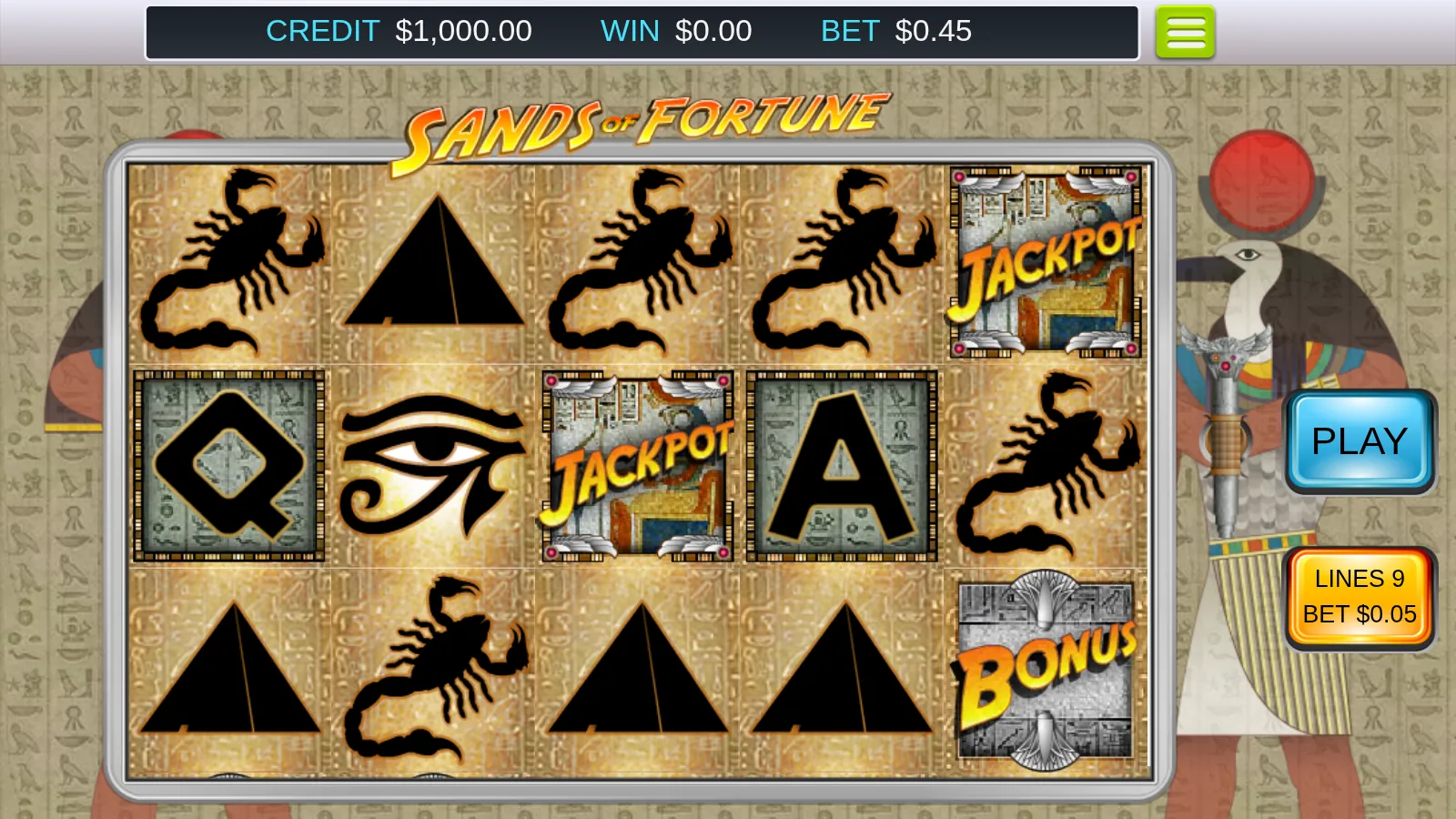
Nine paylines, and a tomb at the end of them. Sands of Fortune is a 2012 Eyecon slot on a sand-gold 5×3 board, with a scorpion, a scarab, a pyramid, and the Eye of Horus drawn as flat black silhouettes over hieroglyphs, and a full-colour Horus standing beside the reels. No free games exist anywhere in it. The demo’s whole feature set is a substituting wild, a BONUS tablet that has to land next to itself, and a return to player of 93.760%. Nothing else. For a studio whose name is attached to free-games ladders and toy-box picks, that is a short list, and it dates the game as precisely as the art does.
Demo Features
The Wild Disc
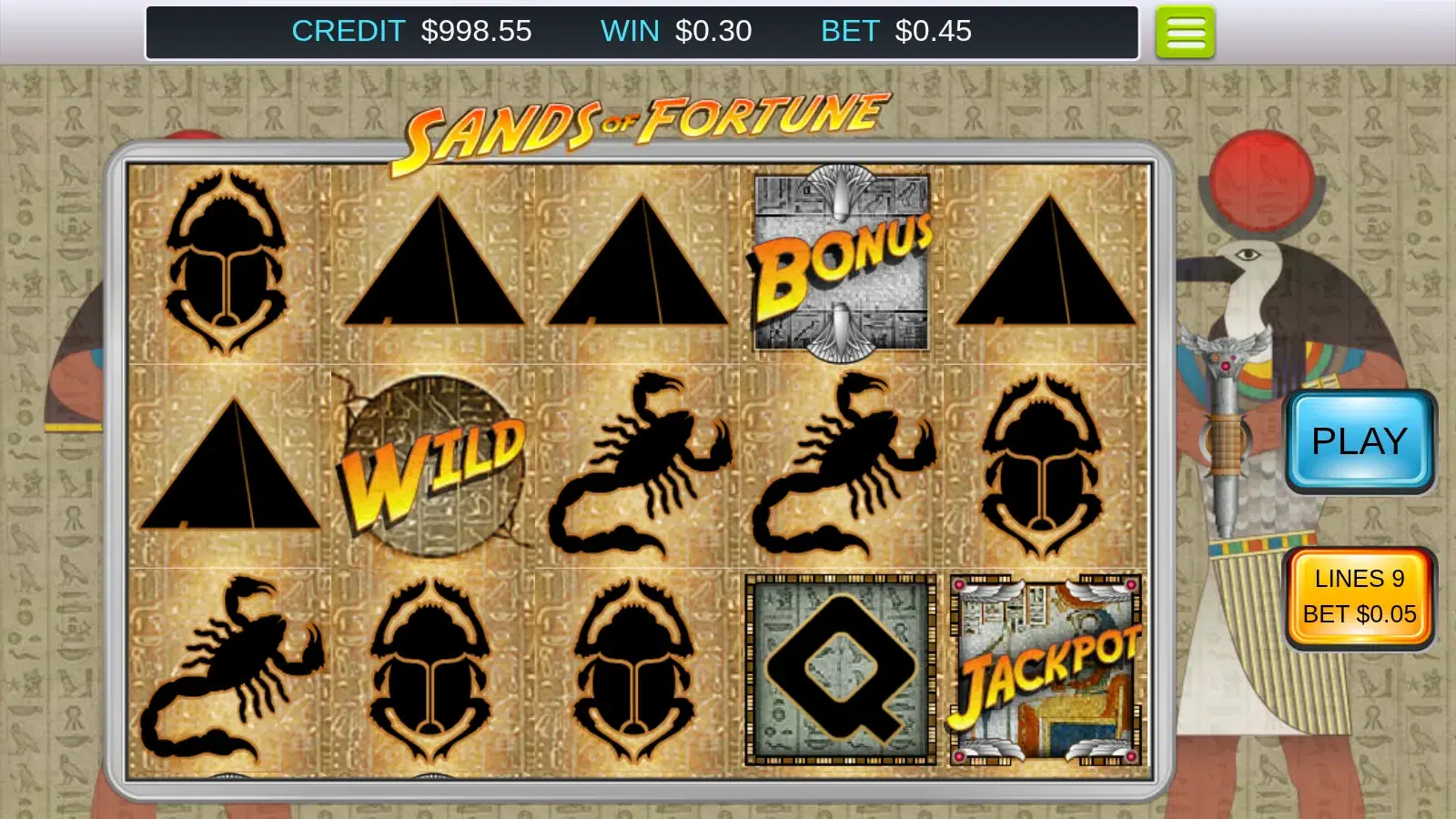
The wild is a stone disc stamped WILD, and it substitutes for any symbol on the pay grid. Eyecon lists no pay tier for it, so it never completes a line on its own account; it finishes other symbols’ lines and does nothing more. No multiplier is attached to it either, which separates this 2012 build from the studio’s later 25-line shells, where the substitute doubles whatever line it joins.
Three Adjacent Tablets
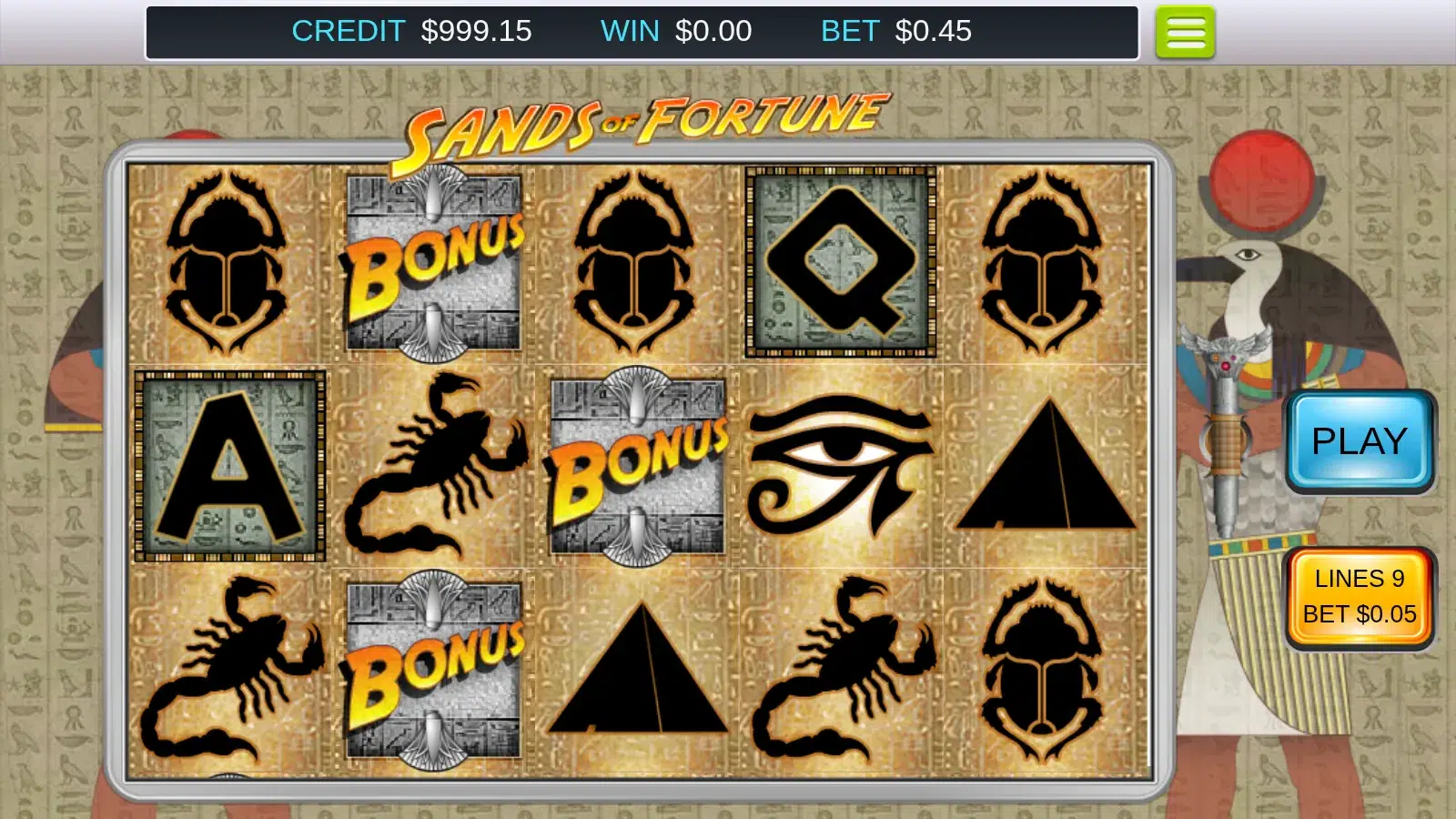
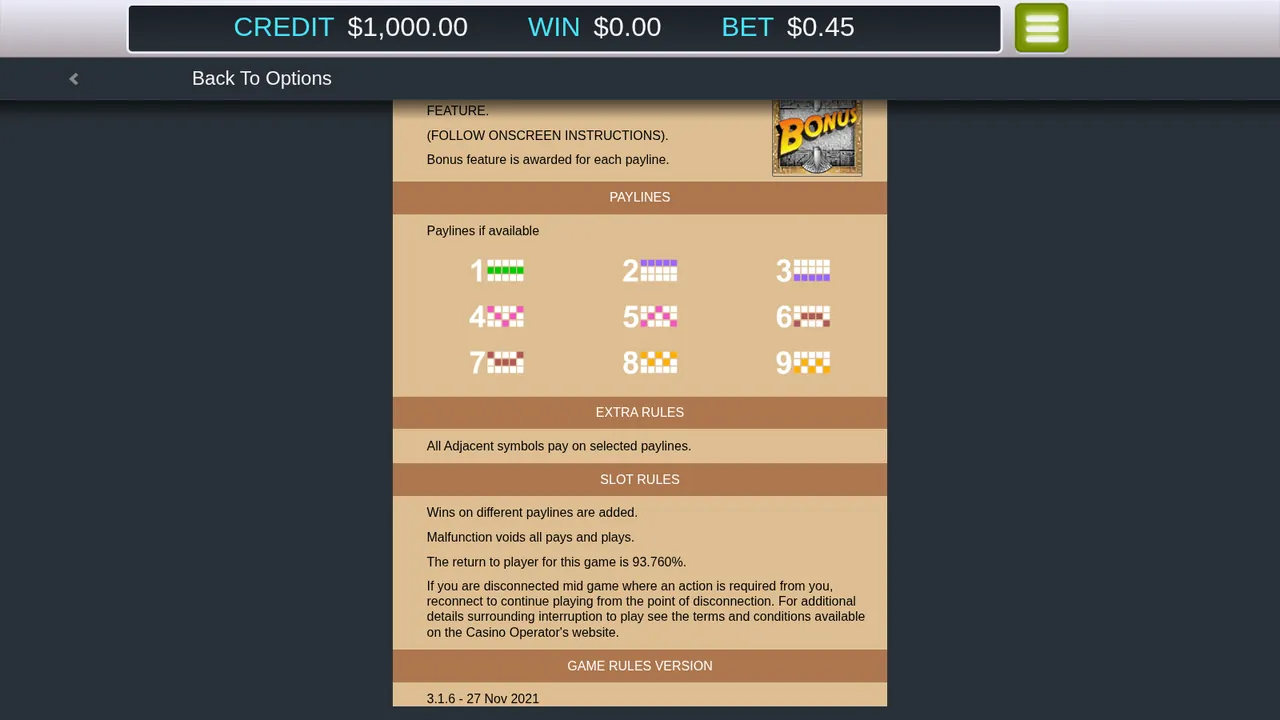
The BONUS tablet is where the game stops following the Eyecon template. Three or more start the special feature, but they have to land side by side on a payline rather than anywhere among the 15 positions, and the feature is awarded for each payline they complete. On a nine-line board, that makes the trigger harder to land than the three-scatter counts Eyecon uses across the rest of its range, and a board carrying three tablets can still come to nothing if they don’t line up.
The Tomb Search
Once the tablets line up, the game hands over to a pick round, a hunt through a tomb with traps waiting among what’s been buried there. The instructions appear on screen when it opens. That pick is the entire feature set: no free games, no respins, no gamble ladder, and nothing that multiplies a line win. Because it’s awarded per payline, it’s also the one part of the game that grows with the number of lines in play rather than with the symbols.

Royals Above the Relics
The order of the pay grid inverts the theme. A, K, and Q pay 222.22x, 111.11x, and 55.56x for five, while the Eye of Horus tops out at 11.11x, the pyramid at 5.56x, the scarab at 2.78x, and the scorpion at 1x. Card ranks take three of the four places behind the top symbol, and every themed image except the eye pays under 6x for a full line. Almost all of the pay grid’s value is stacked in its top four rows.
The JACKPOT Plaque
A gold plaque reading JACKPOT is the top line symbol, paying 11.11x for three, 111.11x for four, and 555.56x for five. No pot, no meter, and no progressive stands behind the word. Set against Eyecon’s 25-line classics, which run a 200x top line and put their money into 15, 20, or 25 free games, this one has nine lines, one pick round, and a top line worth more than twice as much. The rest of the studio’s range is on the Eyecon provider hub, and very little of it is built this way.
How to Play
Payouts
The game runs on up to nine lines, laid out as patterns 1 to 9 across the 5×3 grid, and you can play fewer. Symbols pay from the left along a selected line, only the highest win counts on each line, and the game adds wins on separate lines together.
Adjacency is the word Eyecon uses throughout, and it governs the BONUS tablet as well as the paying symbols, which is the one rule that catches players out here. Nine lines also means the reels are doing less work per spin than a 25-line Eyecon shell, so the pay grid has to pay more when it does land.
Game RTP
One line at $0.01 is as low as a spin goes, and nine lines at $0.25 apiece takes it to $2.25. The return to player is 93.760%, which Eyecon markets as 94%, a rounding of one build rather than a second version. With no free games and no multiplier to carry that return, all of it has to come out of the line pays and the tomb pick.
Sands of Fortune Paytable
The largest value on the pay grid is the JACKPOT plaque’s five-symbol row at 555.56x, and that is a line pay rather than a prize pot. Below it, the drop is steep, with A at 222.22x for five, Q at 55.56x, and the four themed images sharing what is left. Every row starts at three matching symbols, so there is no two-symbol tier at all, which is a real departure from the Eyecon classics whose premiums pay from two.
| Symbol | 3 | 4 | 5 |
|---|---|---|---|
| JACKPOT | 11.11x | 111.11x | 555.56x |
| A | 5.56x | 11.11x | 222.22x |
| K | 2.78x | 5.56x | 111.11x |
| Q | 1.11x | 2.78x | 55.56x |
| Eye of Horus | 0.56x | 1.67x | 11.11x |
| Pyramid | 0.33x | 1.11x | 5.56x |
| Scarab | 0.22x | 0.56x | 2.78x |
| Scorpion | 0.11x | 0.22x | 1x |
Ultimate Slots Verdict
A 2012 Eyecon slot that's easy to read and modest in what it pays.
Nine lines, a pick round that needs its tablets side by side, and no free games, all on a 93.760% return, with a 555.56x top line as the biggest pay on the sheet. It still looks good for its age; the return doesn't hold up as well.
Hits What we like
- The nine-line grid reads at a glance, with every paying line traceable to one of nine diagrams
- Five JACKPOT plaques pay 555.56x, a bigger single-line result than Eyecon's 25-line classics reach
- Card ranks pay like premiums, so an A or K line lands as a result rather than filler
- The wild substitutes for any symbol on the pay grid, with no exclusions listed against it
- Stencilled symbol art and a full-colour Horus beside the reels give it a look no later Eyecon shell copied
Misses What could be better
- 93.760% is well below the studio's usual return, and nothing in the feature set offsets it
- One pick round is the whole feature set, with no free games, no respins, and no multiplier
- The BONUS tablets have to land adjacent, so three of them on the board often start nothing
Detailed Review
Demo Review
With no free-games round and no multiplier anywhere on the reels, the 93.760% return has nowhere to hide. Whatever the game gives back arrives through nine lines and one tomb pick.
Reel symbols are flat black stencils on sandstone while Horus stands at the right of the board in full colour, an odd split that no later Eyecon slot repeated, and the nine-line layout reads instantly. You can follow every line the game is paying without hunting for it, which is more than the studio’s 25-line boards allow. The look has held up better than the return.
The counterweight is the top of the pay grid. Five JACKPOT plaques are worth 555.56x, a larger single-line result than anything in Eyecon’s 25-line range reaches, and A and K follow it at 222.22x and 111.11x. Those are serious numbers for a nine-line slot. Behind those three sit eight more symbols, one pick round that wants three tablets side by side, and nothing at all that multiplies a win once it has landed.
What is left is a period piece. Sands of Fortune comes from before Eyecon’s games settled into free-games ladders and scatter-triggered picks, and the nine-line board and the adjacency rule are the evidence. Anyone after the studio’s Egyptian art with a modern feature set will find it further along the Egyptian slots shelf; anyone curious about where the engine started should open this one.