Pearl Harbor
Pearl Harbor Stats
RTP & Maths
- RTP by Mode
- 96.21% base · 96.15% Banzai! (+50%) · 96.12% 2 Scatter Banzai! (+100%)
- RTP Versions
- 96.21% here · Other versions 94.23%, 92.14%
- Hit Frequency
- 19.31
- Max Win Probability
- 1:150000000
- Max Win Rule
- Applies in round ends once the total win reaches 41,127x, paid at 41,127x
Free Spins & Bonus
- Free Spins
- 3 Scatters = Dogfight (3 spins, reset on any multiplier) · 4 Scatters = Tora! Tora! Tora! (3 spins, reset on any multiplier) · 3 spins, reset to 3 on any multiplier spins
- Ante Bet
- 1.5 / 2 stake · Banzai! +50% guarantees 1 Scatter in the middle of the active area; +100% guarantees 2 Scatters on the initial drop
- Multipliers
- Kamikaze wheel x1, x2, x3, x5, x10, x15, x30, x50 · Cluster multipliers summed with xBomb round multiplier, then multiplied by cluster pay; bonus: (+) summed then multiplies (x) into the round multiplier
Symbols & Pays
- Wild
- All symbols except Scatter
- Scatter Reels
- Any reel, counts only inside the active area, 1 per reel
- Line Pays
- Top symbol 625x · Lowest 0.15x
Pearl Harbor Demo
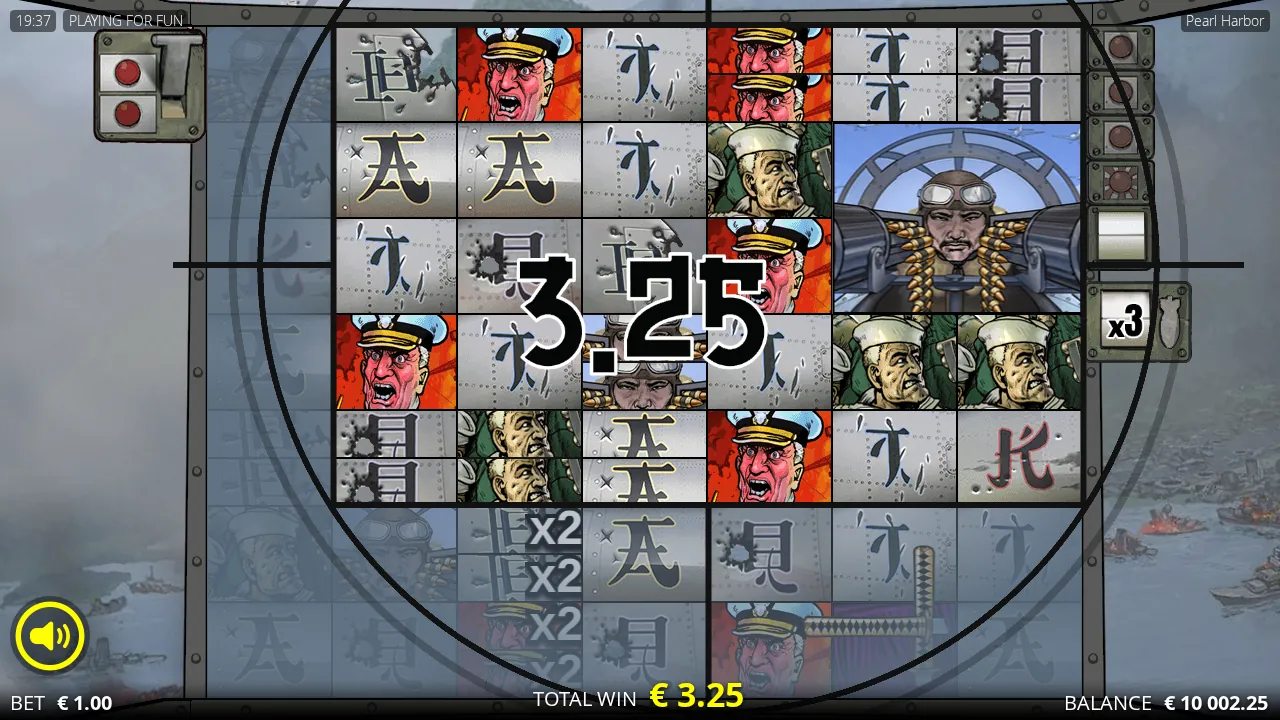
Every round of Pearl Harbor opens on nine live cells. The other 40 positions of a 7×7 frame stay greyed out behind a gunsight, and this cluster slot spends each drop trying to blast that 3×3 window wider. The idea is xSize, the system the studio debuted here on 7 December 2022, the anniversary of the attack, three months after The Border became its first cluster game.
The art shows the harbour burning from the air. A kamikaze pilot, an admiral, a goggled fighter pilot, and a sailor carry the high pays over five bullet-scarred kanji plates, and the flag Scatter and sword xSplit keep it closer to one morning than most war slots get.
Slot Features
Colossal Pilots
Colossal symbols drop in at 2×2 or 3×3, sometimes carrying x2 or x3, and the live area widens to take them whole. Each counts as one symbol in a cluster until swords break it down. A 3×3 becomes three symbols, then nine, then 18, and a fourth split doubles every piece.
Samurai Sword xSplits
The sword starts with one or two blades, each aimed along a row or a column, and splits every symbol in the direction of its handles once the avalanche stops. Another sword hitting it adds a blade, and past four blades, each hit adds x2. Scatters, Targets, and xBombs it catches gain x2, and the spent sword becomes a Wild with a multiplier set by its blades.
Scatters and Banzai!
A flag counts only on a live cell, one per reel. Three open Dogfight, four open Tora! Tora! Tora!, and a split Scatter brings its multiplier into the bonus as an (x) value. Banzai! is the xBet. At 1.5x a spin, it places one Scatter in the middle of the live area; at 2x, two Scatters arrive on the opening drop.
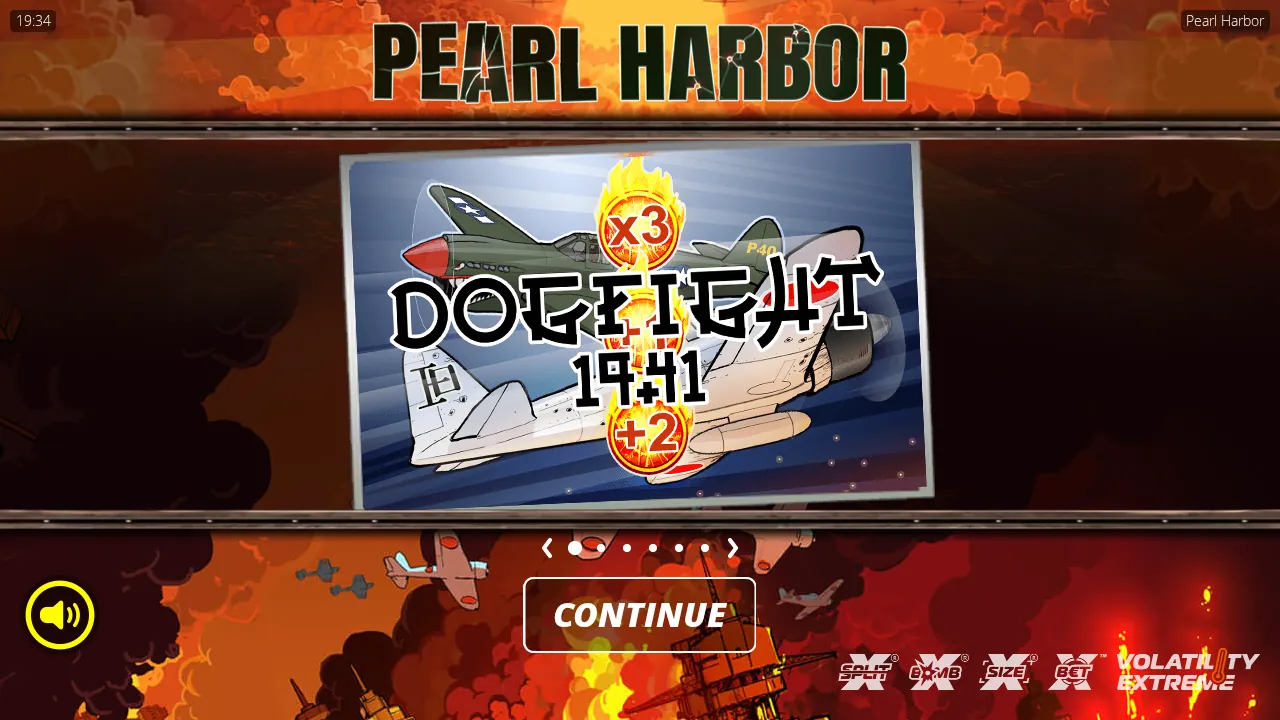
Dogfight and Tora! Tora! Tora!
The Cockpit’s 18 Dials
Each bonus opens with 3 spins in a cockpit of 18 instrument dials, each landing an (x) multiplier, a (+) multiplier, or nothing, and any multiplier resets the count to 3. The game sums the active (+) values, uses that total to multiply every active (x), then adds the result to the round multiplier. Fill a column, and a Dogfight Attack goes after an enemy plane; a hit adds that column, a miss adds nothing.
Kamikaze Attack Wheel
Fill all 18 dials, and after any Dogfights, a wheel spins as a plane dives at a ship. It has x1, x2, x3, x5, x10, x15, x30, and x50 beside its misses, and a hit multiplies the entire round multiplier.
Midway Pop and Bomb Drop
Tora! Tora! Tora! adds Midway Pop, which lifts a middle-row multiplier to the top dial of its column, and Bomb Drop, which fires when a row fills and multiplies that row’s (+) total by its (x) values on a hit. The Nolimit City split of the 96.21% return gives the main game 65.77%, Dogfight 27.55%, and Tora! Tora! Tora! only 2.88%, which is why a 2x Banzai! exists to reach it.
How to Play
A 3×3 Inside a 7×7
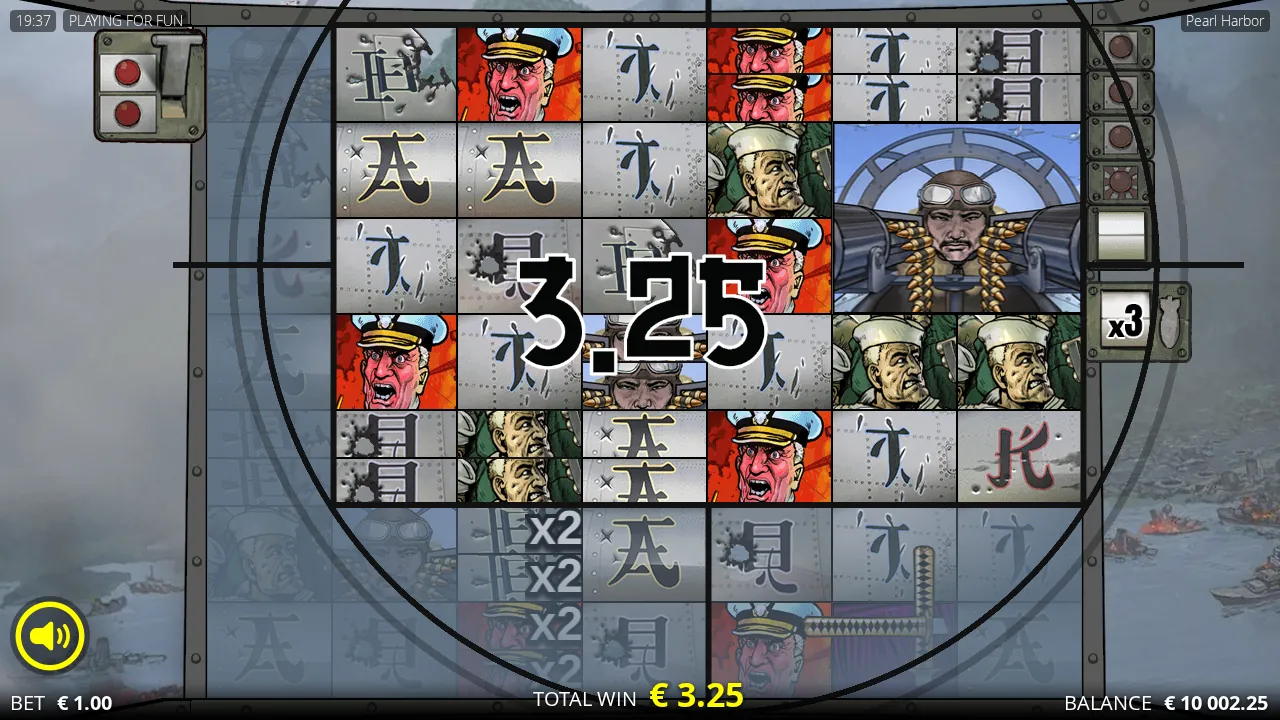
Only the central 3×3 of the frame is live when a round starts, and a win needs five or more matching symbols joined by their sides within that area. Winning symbols clear, new ones drop, and the avalanches continue until nothing connects. Three things widen the area. An xBomb shifts or stretches it by a reel or a row, a Colossal symbol forces it open far enough to fit, and a Target lands anywhere in the 7×7, drags the edge out to include itself, and then turns Wild. A Target in a far corner can take the area from 9 cells to 25 in a single drop. Anything outside the live area counts for nothing, Scatters included, so the early expansions matter more than the small pays that come with them. The game adds any multipliers on symbols in a winning cluster to the round multiplier the xBombs have built, and that total multiplies the cluster’s pay. With the space-bar option ticked in settings, the keyboard starts each drop.
xBomb Wilds
An xBomb Wild clears up to 10 surrounding symbols, but never beyond the live area. Next to the border, it shifts the area by one reel or row; in a corner, it grows the area by a reel and a row together. Each explosion adds +1 to the multiplier for the next avalanche, or the (x) value the bomb was split into, and every xBomb detonates before the next drop. A split xBomb takes x2, then doubles again with each consecutive split. Scatters and converted Wilds outside a winning cluster survive the blast. The same bomb appears in Das xBoot 2wei, the studio’s later WWII submarine game.
RTP and Stakes
The default RTP is 96.21%, and the game also exists at 94.23% and 92.14%, so the figure in its rules screen is the one that applies to any given copy.
Nolimit City labels this game Extreme, while the stats row here calls it High. Both labels come from the same place. A round begins with nine live cells and needs five of them to match before anything pays, so many drops end with no cluster, and the value that does come waits on the area opening up or on a trip to the cockpit. The studio’s Extreme is the stronger reading of that pattern, and our High is the same warning on a coarser scale. The lightest round is €0.20 and the heaviest €100.
Cluster Payouts
Only the kamikaze pilot pays 1x for a five-cluster, and his ladder climbs to 625x for 40 or more. The admiral, fighter pilot, and sailor top out at 375x, 275x, and 180x, each equal to a rung one, two, and three steps lower on the pilot’s scale, and the five kanji plates finish between 75x and 30x. A 40-symbol cluster needs at least 40 live cells, so the last row only comes into play once the area reaches 7×6 or the full frame. A Wild can complete a cluster of any character or plate, though never a flag.
| Cluster size | Kamikaze pilot | Admiral | Fighter pilot | Sailor | Plate 1 | Plate 2 | Plate 3 | Plate 4 | Plate 5 |
|---|---|---|---|---|---|---|---|---|---|
| 5 | 1x | 0.7x | 0.65x | 0.5x | 0.4x | 0.3x | 0.25x | 0.2x | 0.15x |
| 6 | 1.5x | 0.9x | 0.85x | 0.75x | 0.6x | 0.5x | 0.4x | 0.3x | 0.25x |
| 7 | 2.1x | 1.25x | 1.1x | 0.95x | 0.75x | 0.65x | 0.5x | 0.4x | 0.35x |
| 8 | 3.5x | 2x | 1.75x | 1.5x | 1x | 0.75x | 0.75x | 0.5x | 0.45x |
| 9 | 5x | 3x | 2.75x | 2.5x | 1.5x | 1.5x | 0.9x | 0.75x | 0.65x |
| 10 | 12.5x | 6.25x | 5x | 3x | 2.5x | 2.25x | 2x | 1.4x | 0.95x |
| 11-12 | 25x | 12.5x | 7.5x | 5x | 3.5x | 2.75x | 2.25x | 2x | 1.5x |
| 13-14 | 40x | 17.5x | 15x | 10x | 5x | 3.5x | 4x | 2.5x | 2x |
| 15-16 | 50x | 25x | 20x | 15x | 8.5x | 5x | 5x | 3.75x | 2.75x |
| 17-18 | 60x | 37.5x | 30x | 20x | 12.5x | 8.5x | 7.5x | 5x | 3.75x |
| 19-21 | 75x | 50x | 40x | 25x | 17.5x | 12.5x | 10x | 7.5x | 5x |
| 22-24 | 90x | 62.5x | 50x | 37.5x | 22.5x | 17.5x | 12.5x | 10x | 7.5x |
| 25-29 | 180x | 75x | 60x | 50x | 30x | 22.5x | 17.5x | 15x | 10x |
| 30-33 | 275x | 90x | 75x | 60x | 40x | 30x | 22.5x | 20x | 15x |
| 34-37 | 375x | 180x | 90x | 75x | 50x | 40x | 30x | 25x | 20x |
| 38-39 | 500x | 275x | 180x | 90x | 60x | 50x | 40x | 30x | 25x |
| 40+ | 625x | 375x | 275x | 180x | 75x | 60x | 50x | 40x | 30x |
Ultimate Slots Verdict
A cluster board with a plot. Every round starts in a 3x3 and makes bombs, Targets, and Colossal pilots fight for space, and the cockpit bonus is just as inventive. Expect long quiet stretches between the good drops.
✓ What We Like
- Nine live cells that can grow to 49 give every round a visible arc
- The cockpit bonus builds multipliers on 18 dials instead of spinning reels
- Colossal pilots split from one symbol into 18 as the frame opens
- The Kamikaze Attack wheel reaches x50 on the whole round multiplier
✗ What Could Be Better
- Most drops pay nothing, and each round starts back at 3x3
- Tora! Tora! Tora!, the richer mode, is the one you'll see least
Detailed Review
Chaos With a Plan
The live area decides this game. Every other feature is judged by what it does to that 3×3 window. The xBomb matters because it moves the walls, a Target because it drags them out towards a corner, a Colossal pilot because the board has to make room for him. Even the xSplit, a feature the studio uses across its catalogue, reads differently here, since a split on a nine-cell board and a split on a 42-cell board are different events.
Most cluster slots hand over the full grid from the first drop and let the tumbles do the work. Pearl Harbor makes the grid the progression. A round has a shape, cramped at the start and wide open if the bombs and Targets cooperate, and that shape is what we’d point to as the studio’s cluster format at its most inventive.
The cockpit bonus keeps the same habit of building towards something. Three spins that reset whenever a multiplier lands, columns that launch Dogfight Attacks, and a full panel that calls in the Kamikaze wheel make it a multiplier puzzle rather than a run of free spins, and it looks nothing like the reels it replaces.
The cost is plain. Most drops pay nothing. Nine live cells and a five-symbol minimum leave very little room, and every round starts cramped again however far the last one got. The game is built to make that feel like progress anyway, because each bomb that moves a wall looks like a step forward even when no cluster follows, and long runs of small, dead rounds are the normal texture. Tora! Tora! Tora!, the mode with Midway Pop and Bomb Drop, is also the one a player meets least.
Per Lindheimer, the studio’s product owner, called the attack “perhaps one of the most chaotic events in history” at launch, and the board is built to that brief. Bombs clear holes, swords cut symbols in half, Colossal pilots shove the walls aside, and avalanches refill the gaps, all at once. It reads as noise for the first few rounds. Then, the order shows through, because each of those events answers the same question of how big the live area gets.
None of that undoes what the board achieves. The Border came first among the studio’s cluster games, but this is where the format found a plot, and few slots in this review series give a grid a reason to change shape. In the demo, the arc from nine cells to the full frame is worth watching more than once, and playing it free for a while makes it easy to count how rarely it completes.
It’s a cluster slot with a story, and the story stands up.


